
Begin with a manageable foundation
After sincerely declaring your faith, you begin living and learning as a Muslim. There is no expectation that every unfamiliar word will suddenly make sense. Your next task is to build a foundation in worship, understanding and good character.
Keep a short notebook of questions and agree a way to ask for help. Having someone you can speak to again is often more useful than collecting many disconnected pieces of advice.
Learn purification and the daily prayers
Ask a teacher about ghusl, the full ritual washing, and learn how to make wudu before prayer. Then learn the prayer times, the direction of prayer and the basic sequence of standing, bowing and prostrating.
The daily prayers are Fajr, Dhuhr, Asr, Maghrib and Isha. Begin learning how to perform them and ask what to say while you are still memorising the Arabic. If you have an illness, disability or another relevant circumstance, ask how to pray in a way appropriate to your ability.
A demonstration followed by practising together can make instructions easier to remember. Write down your teacher’s guidance so that you can use it when you are at home.
Build a relationship with the Quran
Read a small amount regularly in a reliable English translation. Start with the meanings of Al-Fatihah and short chapters such as Al-Ikhlas. Ask about words or passages you do not understand.
Learning Arabic recitation can develop alongside reading the meanings. A short, consistent study time is a practical place to start; you do not need to set a target that leaves you exhausted.
Choose supportive company
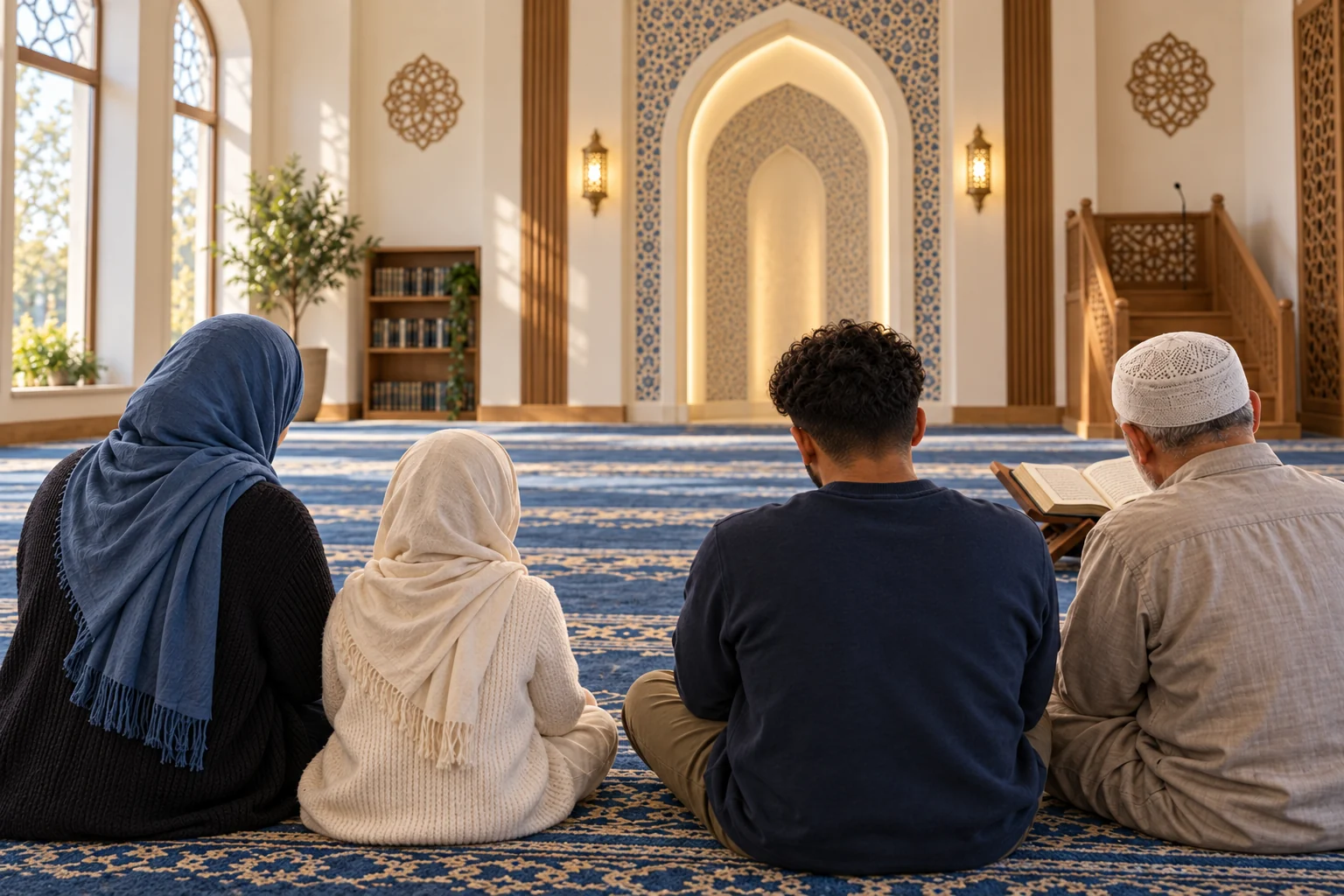
Look for patient people who help you learn without humiliating you for mistakes. A mosque, beginner class or trustworthy mentor may provide useful support. Ask about the teaching approach and whether there is time for questions.
Muslim communities include different languages, cultures and scholarly traditions. If you see a difference in practice, ask about it calmly rather than assuming one person must be acting without faith.
Approach everyday changes thoughtfully
Learn the basic guidance about food, modesty, fasting and relationships, then ask how it applies to your circumstances. Before Ramadan, learn about fasting and the exemptions relevant to your situation. Personal matters such as an existing marriage should be discussed privately with a qualified imam.
Deal honestly and kindly with family, neighbours and colleagues. Think ahead about practical conversations: meal arrangements, prayer breaks or attending family occasions. You do not need to explain every religious subject in the first conversation.
If sharing your conversion could expose you to harm, seek trusted support about when and how to tell others.
Use a small first-week checklist
- Identify someone reliable to ask about faith and practice.
- Learn wudu and begin practising prayer with guidance.
- Find a reliable Quran translation and read a little each day.
- Write down unfamiliar terms and your unanswered questions.
- Choose one practical learning goal to discuss at your next meeting.
This is a suggested learning plan, not a religious deadline. Continue meeting your responsibilities, seek forgiveness when you fall short and keep returning to what you are learning. Progress includes becoming more truthful, considerate and dependable in ordinary life.