
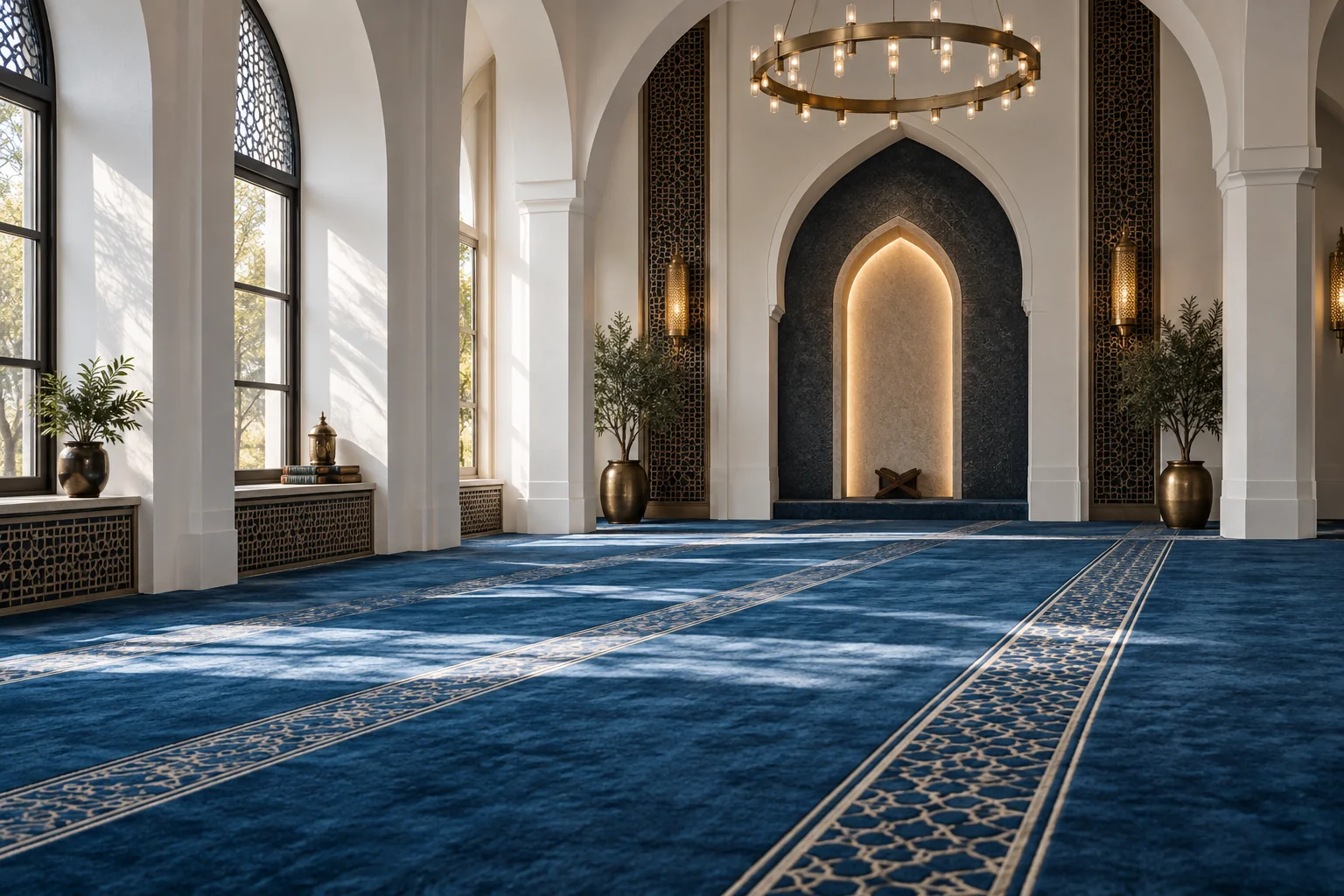
This guide explains the daily obligatory prayers when praying on your own. Other recognised schools differ in some details. Ask a teacher about posture, pronunciation or your circumstances.
01 · Get ready
Before you begin.
- Time: check that the prayer’s time has entered.
- Purification: have valid wudu, and ghusl when required; keep your body, clothes and prayer place clean.
- Clothing: wear opaque clothing covering the required areas. Men cover from navel to knees; women cover their body and hair, except face, hands and feet in this Hanafi outline.
- Direction: face the Qiblah towards the Ka‘bah. Know which prayer you intend to offer for Allah.
02 · Know your prayer
Five prayers. A daily rhythm.
A rak‘ah is one unit of prayer. These are the obligatory, or fard, units:
| Prayer | Time of day | Fard rak‘ahs |
|---|---|---|
| Fajr | Dawn | 2 |
| Dhuhr | After midday | 4 |
| Asr | Afternoon | 4 |
| Maghrib | After sunset | 3 |
| Isha | Night | 4 |
Sunnah prayers and Witr are additional to this table.
Movement overview · Use the steps below to follow the sequence.
03 · Your first rak‘ah
Follow the prayer, step by step.
Pause calmly in each position. Move without rushing.
Begin with the takbir
Stand if able. Raise your hands and say:
اللَّهُ أَكْبَرُ
PronunciationAllahu akbar
MeaningAllah is the Greatest.
Fold your right hand over your left. In this Hanafi method, men raise their hands towards their ears and fold below the navel; women raise towards their shoulders and fold at the chest.
Recite while standing
Begin with the opening supplication, then seek Allah’s protection. Recite al-Fatihah, including the Bismillah, say Amin quietly, then recite another surah.
Opening supplication & seeking protection
سُبْحَانَكَ اللَّهُمَّ وَبِحَمْدِكَ، وَتَبَارَكَ اسْمُكَ، وَتَعَالَى جَدُّكَ، وَلَا إِلَهَ غَيْرُكَ
PronunciationSubhanaka Allahumma wa bihamdika, wa tabarakasmuka, wa ta‘ala jadduka, wa la ilaha ghayruk.
MeaningGlory and praise are Yours, O Allah. Your name is blessed and Your majesty exalted. None is worthy of worship except You.
أَعُوذُ بِاللَّهِ مِنَ الشَّيْطَانِ الرَّجِيمِ
PronunciationA‘udhu billahi minash-shaytanir-rajim.
MeaningI seek Allah’s protection from Satan, the rejected one.
Surah al-Fatihah · Arabic, pronunciation & meaning
01بِسْمِ ٱللَّهِ ٱلرَّحْمَـٰنِ ٱلرَّحِيمِ
PronunciationBismillaahir Rahmaanir Raheem
MeaningIn the name of Allah, the Beneficent, the Merciful.
02ٱلْحَمْدُ لِلَّهِ رَبِّ ٱلْعَـٰلَمِينَ
PronunciationAlhamdu lillaahi Rabbil 'aalameen
MeaningPraise be to Allah, Lord of the Worlds,
03ٱلرَّحْمَـٰنِ ٱلرَّحِيمِ
PronunciationAr-Rahmaanir-Raheem
MeaningThe Beneficent, the Merciful.
04مَـٰلِكِ يَوْمِ ٱلدِّينِ
PronunciationMaaliki Yawmid-Deen
MeaningMaster of the Day of Judgment,
05إِيَّاكَ نَعْبُدُ وَإِيَّاكَ نَسْتَعِينُ
PronunciationIyyaaka na'budu wa lyyaaka nasta'een
MeaningThee (alone) we worship; Thee (alone) we ask for help.
06ٱهْدِنَا ٱلصِّرَٰطَ ٱلْمُسْتَقِيمَ
PronunciationIhdinas-Siraatal-Mustaqeem
MeaningShow us the straight path,
07Listen in our Quran readerصِرَٰطَ ٱلَّذِينَ أَنْعَمْتَ عَلَيْهِمْ غَيْرِ ٱلْمَغْضُوبِ عَلَيْهِمْ وَلَا ٱلضَّآلِّينَ
PronunciationSiraatal-lazeena an'amta 'alaihim ghayril-maghdoobi 'alaihim wa lad-daaalleen
MeaningThe path of those whom Thou hast favoured; Not the (path) of those who earn Thine anger nor of those who go astray.
Surah al-Ikhlas — a short surah to learn · Arabic, pronunciation & meaning
01قُلْ هُوَ ٱللَّهُ أَحَدٌ
PronunciationQul huwal laahu ahad
MeaningSay: He is Allah, the One!
02ٱللَّهُ ٱلصَّمَدُ
PronunciationAllah hus-samad
MeaningAllah, the eternally Besought of all!
03لَمْ يَلِدْ وَلَمْ يُولَدْ
PronunciationLam yalid wa lam yoolad
MeaningHe begetteth not nor was begotten.
04Listen in our Quran readerوَلَمْ يَكُن لَّهُۥ كُفُوًا أَحَدٌۢ
PronunciationWa lam yakul-lahu kufuwan ahad
MeaningAnd there is none comparable unto Him.
The English pronunciation helps you practise; the recitation in Salah is in Arabic.
Bow — ruku‘
Say Allahu akbar and bow, placing your hands on your knees. Settle into the position. Say three times:
سُبْحَانَ رَبِّيَ الْعَظِيمِ
PronunciationSubhana rabbiyal-‘azim.
MeaningGlory to my Lord, the Magnificent.
Stand upright again
As you rise, say the first phrase. Once upright, say the second and pause:
سَمِعَ اللَّهُ لِمَنْ حَمِدَهُ
PronunciationSami‘allahu liman hamidah.
MeaningAllah hears the one who praises Him.
رَبَّنَا لَكَ الْحَمْدُ
PronunciationRabbana lakal-hamd.
MeaningOur Lord, praise belongs to You.
Prostrate — sujud
Say Allahu akbar and lower into prostration. Your forehead, nose, hands, knees and toes touch the ground. Say three times:
سُبْحَانَ رَبِّيَ الْأَعْلَى
PronunciationSubhana rabbiyal-a‘la.
MeaningGlory to my Lord, the Most High.
Sit, then prostrate again
Say Allahu akbar, sit upright and pause. Say Allahu akbar again and make a second prostration, repeating its words three times. This completes one rak‘ah.
04 · Continue your prayer
After the first rak‘ah.
Rise with Allahu akbar. For the second unit, begin with Bismillah and al-Fatihah, followed by another surah. Repeat the bowing, standing, two prostrations and sitting between them.
After the second prostration of the second unit, sit and recite the Tashahhud:
Tashahhud · Words of testimony
التَّحِيَّاتُ لِلَّهِ وَالصَّلَوَاتُ وَالطَّيِّبَاتُ، السَّلَامُ عَلَيْكَ أَيُّهَا النَّبِيُّ وَرَحْمَةُ اللَّهِ وَبَرَكَاتُهُ، السَّلَامُ عَلَيْنَا وَعَلَى عِبَادِ اللَّهِ الصَّالِحِينَ، أَشْهَدُ أَنْ لَا إِلَهَ إِلَّا اللَّهُ، وَأَشْهَدُ أَنَّ مُحَمَّدًا عَبْدُهُ وَرَسُولُهُ
PronunciationAt-tahiyyatu lillahi was-salawatu wat-tayyibat. As-salamu ‘alayka ayyuhan-nabiyyu wa rahmatullahi wa barakatuh. As-salamu ‘alayna wa ‘ala ‘ibadillahis-salihin. Ashhadu an la ilaha illallah, wa ashhadu anna Muhammadan ‘abduhu wa rasuluh.
MeaningAll honour, worship and goodness belong to Allah. Peace, Allah’s mercy and His blessings be upon you, O Prophet. Peace be upon us and upon Allah’s righteous servants. I bear witness that none is worthy of worship except Allah, and that Muhammad is His servant and Messenger.
In the Hanafi method, raise the right index finger at la ilaha and lower it at illallah.
05 · Complete the prayer
The final sitting.
After Tashahhud, send blessings upon the Prophet Muhammad ﷺ, then make a supplication. If you have prayed a third or fourth unit, begin this final sitting with Tashahhud.
Salawat · Blessings upon the Prophet ﷺ
اللَّهُمَّ صَلِّ عَلَى مُحَمَّدٍ وَعَلَى آلِ مُحَمَّدٍ، كَمَا صَلَّيْتَ عَلَى إِبْرَاهِيمَ وَعَلَى آلِ إِبْرَاهِيمَ، إِنَّكَ حَمِيدٌ مَجِيدٌ. اللَّهُمَّ بَارِكْ عَلَى مُحَمَّدٍ وَعَلَى آلِ مُحَمَّدٍ، كَمَا بَارَكْتَ عَلَى إِبْرَاهِيمَ وَعَلَى آلِ إِبْرَاهِيمَ، إِنَّكَ حَمِيدٌ مَجِيدٌ
PronunciationAllahumma salli ‘ala Muhammadin wa ‘ala ali Muhammad, kama sallayta ‘ala Ibrahima wa ‘ala ali Ibrahim, innaka hamidun majid. Allahumma barik ‘ala Muhammadin wa ‘ala ali Muhammad, kama barakta ‘ala Ibrahima wa ‘ala ali Ibrahim, innaka hamidun majid.
MeaningO Allah, bestow Your favour upon Muhammad and his family, as You bestowed Your favour upon Ibrahim and his family. You are worthy of all praise and glory. O Allah, bless Muhammad and his family, as You blessed Ibrahim and his family. You are worthy of all praise and glory.
A supplication from the Quran · 2:201
رَبَّنَا آتِنَا فِي الدُّنْيَا حَسَنَةً وَفِي الْآخِرَةِ حَسَنَةً وَقِنَا عَذَابَ النَّارِ
PronunciationRabbana atina fid-dunya hasanatan wa fil-akhirati hasanatan wa qina ‘adhaban-nar.
MeaningOur Lord, grant us good in this life and good in the life to come, and protect us from the punishment of the Fire.
Finish with salam
Turn your head to the right and say the greeting below. Repeat it while turning to the left. Your prayer is complete.
السَّلَامُ عَلَيْكُمْ وَرَحْمَةُ اللَّهِ
PronunciationAs-salamu ‘alaykum wa rahmatullah.
MeaningPeace and Allah’s mercy be upon you.
Keep learning
You can ask for help.
At Jama’ah: follow the imam’s movements after him. This page’s individual recitation instructions are for praying alone; ask a teacher what to recite when following an imam.
If standing is difficult: prayer can be adapted to your ability. Ask the centre about learning seated prayer.
Bring your questions about wudu, hand placement, pronunciation or joining the congregation. You do not need to work everything out by yourself.
Ask about learning to prayLearning references & Quran text credits
Original Ihsan Youth learning guide. References: Muslim Hands — How to Perform Salah; iERA — Prayer guide; Sahih al-Bukhari 757, 831 and 3370; Sahih Muslim 404a.
Quran chapter text: Tanzil Project, reproduced unchanged. English chapter meanings: Marmaduke Pickthall. Chapter pronunciation: Al Quran Cloud / Islamic Network. Quran text licence. The other English meanings on this page are explanatory translations.